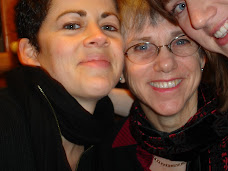
Today I’m thinking of the various ways that the Japanese are different from “Americans”. Obviously, I’m generalizing on both sides but some things seem to hold up pretty well to scrutiny. For example, the Japanese women, across the board, look a whole lot younger and prettier than we do! I know that I’m not really a good example of a 60 year old American, letting my hair go naturally gray, since few people do that anywhere in the industrialized world, but here I am repeatedly asked my age, something the Japanese do to everyone regardless or gender or age, and with wonder some black-haired modern version of a slightly aging Geisha will say: “Oh we’re the same age!” I think it’s supposed to be a friendly thing to say, but I have to share that I’m usually totally taken aback! To look at them I would have guessed 50 at most, and well preserved at that. As a gaigin I always feel a bit big and clumsy here, but as these occurrences add up, I realize I must look like I’m 80 to the Japanese! How is it that all these women look so good? I’ve talked to a few others students here who say the same thing. If you think the Asian women you are talking to is sort of young to be out of school, she’s probably 25 or 30 years old!
Today I went with a fellow student to the house of a Japanese family for the purpose of participating in their informal English club, a monthly occurrence where a few friends get together to practice their English. I was invited to join the group, as Arturo is about to return to his country, Mexico, and was looking for people to help out. Today it was just he and I, though I’m told there are other “English speakers” who come from time to time. Actually, I’m the only native speaker in the group at the moment.
While we were waiting for every one to get there, the conversation was mostly in Japanese and I only understood part of it, but the hostess was talking to someone who I took to be her daughter. She looked to be about 14 or 15, with short a pixy-like haircut, and was generally tiny, probably a size 0. A little later when everyone was there, we were doing introductions all around the table and this young lady, who spoke English pretty well, turned out to be the mother of three children, ages 10, 8, and 4. She met her husband in Australia where they were both working as tour guides for Japanese tours to that country. She claimed to be lazy because she only had a part-time job, working three days a week, plus she has just taken on teaching swimming to children several times a week!
Next, the “middle aged”, perfectly appointed lady to my right told me she was 60 and only worked part-time at Mitsubishi Motors. Her hobbies were growing vegetables and traveling. When I introduced myself, they seemed surprised that I’ve come here to learn Japanese at my age! The aikido and kayaking surprise them as well. Not that I’m really old by Japanese standards. The oldest person in Okazaki is 104 years old. Next Monday is the Day for Honoring the Elderly and that usually means people over 75, I am told.
Not only do the Japanese look younger, and live longer than we do, they are also “genki”. This means fit, energetic, and lively, and also healthy. You see people who are clearly past retirement age, riding around on their bicycles, or zipping by on motor scooters. They go to the grocery store every day and carry their bags home themselves, they dance for hours in matsuris (festivals) and who knows what else to stay so fit, plus they eat a lot less than we do, and a much better diet, although junk food is making big inroads in Japan. Yuck.
While I am generalizing a bit, I might as well say that in addition to be so very polite, which “everyone knows”, they are also very generous. Gift giving is a big part of social exchanges here, but it isn’t always formal and planned. Today the hostess of this gathering gave me a lovely little gift of paper figures, and later as an after thought gave me a book she had in English about the cherry blossom festival of Washington to DC. (The cherry trees were a gift from Japan back at the turn of the 19th century). She also gave me some little samples of Japanese calligraphy, and two free tickets to an ikebana show in Nagoya next week!
Well, this didn’t get posted when it was written, but I’ll post it any way. I hope to get a report on my first tea ceremony soon!
Sunday, September 28, 2008


Saturday, September 6, 2008
The Onsen

I’ve gotten a little behind on the blog as my course work is really picking up, as in getting much more demanding and “outside activities” are taking up time as well. The last couple of weeks have been packed with new experiences. It started on Friday, a week ago, when classes were canceled due to the torrential rains that hit Aichi Ken, the state where I am living. Okazaki was particularly hard hit. Flooding made travel impossible, trains stopped running, houses were swept off their foundations by the over flowing rivers and streams.
Friday afternoon a classmate Skyped me, did I want to go to an onsen? Onsen is Japanese for hot springs/spa. Although I knew they were everywhere I was surprised to learn that there was one right down the road and we could just walk there or take our bikes. We took our bikes. All I really knew about onsens is written above, so I was curious and nervous. Catherine said we didn’t need to bring anything but the 600 yen it would cost. This was almost true. We found it without trouble just off the main road. It was big and there were lots of cars (and a few bikes) in the parking lot. I guess others had had the same idea, no school or work, go for a soak. We took off our shoes at the entrance and put them in a locker. Unlike the lockers in the izakaya, Japanese pub that I went to last week where the shoe/bag lockers had these interesting wooden keys, these little lockers required a 100 yen coin to lock but when you returned and unlocked them to take your shoes the coin was returned to you. We then bought a ticket for 650 yen (less then $6.50) from the ticket vending machines, similar to the ones that sell train tickets at the station, which we gave to the attendant at the reception desk and passed into the bathing area of the facility. Here you have to make sure your Japanese is good enough to distinguish between the women’s entrance and the men’s, or you could be in for a bit of surprise. These entrances were side by side, as the men have a separate, adjacent, and from the brochure it appears, almost identical section. There was not a word of English to be seen. Thank goodness Catherine, who speaks Chinese, is really good at deciphering kanji. I was very relieved to be with her in this culturally and linguistically distant galaxy.
Almost immediately after entering the women’s “locker room” we realized we had were not going to be supplied with a towel and we hadn’t brought our own, so we back tracked to the desk and asked for a “taoru”. We were given (for another 150 yen, not to be returned), a cute little plastic shopping bag containing one large towel and one smaller one. These were to be returned to the desk when we left. We returned to the locker room, found a locker that, like the shoe lockers, required a 100-yen coin that would also be returned by the lock when we put the key in and opened the door. Here we left all our clothes and our modesty and proceeded into the washing area of the onsen. The next step of the process is to get perfectly and completely clean. We hadn’t brought soap or shampoo but these were supplied at each washing station. Each washing stall had a plastic stool in from of a mirror, a faucet, and a hand held shower sprayer thing like the one in my own bathroom here. There was also a plastic basin used to pour water over yourself. I took my cues from Catherine, who had done this before, and the other ladies I could see behind me. I sat on the stool and soaped up and scrubbed myself as best I could, and rinsed off well. It’s a very big faux pas to be either dirty or soapy going into the bath, whether in an onsen or at home. If you think you feel conspicuous being the only non-Asian person in the place, trying being the only non-Asian naked person! I had to work a bit at my cultural flexibility to get with the program and just act like I’m totally cool hanging out in “my birthday suit” with women of all ages. Actually there was one little boy of about 4 or 5, who seemed to be there with his grandmother.
For our bathing pleasure we had a variety of outdoor “pools” and tubs as well as indoor ones with Jacuzzi style jets. We eventually tried all the pools and tubs, even the cold one for cooling off. After about an hour I was hot and wrinkly enough, and ready to leave. I could tell that some of the Japanese ladies there were just settling in for the afternoon and would probably stay much longer than an hour. The bath and especially bathing in a hot spring is a very old and cherished tradition here. It’s not viewed as entertainment the way hot tubs are in America, but it’s definitely more than just getting clean. There’s a certain air of sacredness to it. People talk in quite tones and don’t ever splash or kick their feet. It is definitely something the Japanese are introduced to from very young. There were several very little children there with their mothers or grandmothers. And judging by appearances only, one is never too old to go to an onsen either. So despite my discomfort being naked, I was buoyed by the fact that I wasn’t the only old bag there! (There are no pictures allowed inside the onsen but the one above is of a sculpture outside the entrance. Frogs are very popular here.)
Saturday, August 23, 2008
Olympics
Today I am Beijing, running the men’s marathon step by step. The Japanese TV station I am watching is showing the entire race, uninterrupted by a single ad. As the men pound their way though the Forbidden City, I not only get to see each one run his race but also I get to see this famous Chinese landmark. The pace is incredible! The leaders have been doing about 3 minutes kilometers and have how many more to do? A pack of ten men are leading. Spain in the only non-African country represented in the group. During the last few weeks I have watched more hours of TV than in my entire life till now! There has been so much Olympics coverage and here it’s more like being there, they show lots of the events real time, live, without interruptions. Yesterday I saw some amazing synchronized swimming performances by teams from China, Korea, Japan, America, Spain and Russia. I’m not sure who got what medal but they were all incredible. I have never even seen this sport before, let alone had an opportunity to see the entire routine of numbers teams. I’ve also seen entire soccer games. The Japanese women’s team has done very well. Oh, the lead pack is down to 5 men, two from Eritrea, two from Kenya, and one from Morocco. Beijing, (Peikin, they call it in Japanese) is filled with flowers and tree lined boulevards. But I bet it’s hot. I used to run and I can’t imagine having to do this many kilometers on hot pavement! My knees hurt just watching these guys. I think of all my friends who also run, or used to run. Perhaps you are watching the same race on your TV sets right now, thinking the same thing.
Luckily lots of sports words in Japanese are just English words, so I hear things like “chioto haiyai pace desu ne” , meaning it’s a bit of a fast pace isn’t it and “ Corsu no speedo de…” , which means “about the course speed”. It’s fun trying to figure out what the announcers are saying, as there is a running dialogue talking about the runners, (no pun intended) their previous records, their ages, and other stuff I totally don’t catch, but it’s good practice listening to it all in Japanese.
On Friday night I went with a couple of fellow students to a kaiten-zushi restaurant. You may have heard about these sushi restaurants where the offerings are circulating around on a conveyor belt and one just picks up the plates you want to eat as they go by. This was cheap sushi, a 100 yen (less than a $1) a plate, with usually two pieces of sushi or three pieces of a roll per plate. There were also desserts and drinks going by. We sat in a booth and the belt passed by at the end of table. There was also a second layer belt for special orders on which a little shikansen train (bullet train) went by. To order something that you didn’t see going by on the regular belt, you used a touch screen at the booth and could order different sushi, tempura, even noodle dishes, drinks and desserts. When your order was ready the train would stop at your booth. You took the plates off, pressed a button to say you had them and the train moved “out of the station”. It was all so cute. While the conveyor constantly circled with new offering, the little bullet train continually zoomed by with other people’s orders and we would ooo and ahh as they went by. Lucky Amelia was with us and could read the menu. I would have been lost. In all, I spent about $5 and was full. It wasn’t top quality, but it wasn’t bad and the price was right. Also, it was fun. I liked the free green tea that you made at your table where a hot water spout and cups were right at your fingertips. I have yet to go to a real sushi bar and get the really good stuff. Sorry I don’t have pictures of the restaurant, maybe next time and there will definitely be a next time!
Luckily lots of sports words in Japanese are just English words, so I hear things like “chioto haiyai pace desu ne” , meaning it’s a bit of a fast pace isn’t it and “ Corsu no speedo de…” , which means “about the course speed”. It’s fun trying to figure out what the announcers are saying, as there is a running dialogue talking about the runners, (no pun intended) their previous records, their ages, and other stuff I totally don’t catch, but it’s good practice listening to it all in Japanese.
On Friday night I went with a couple of fellow students to a kaiten-zushi restaurant. You may have heard about these sushi restaurants where the offerings are circulating around on a conveyor belt and one just picks up the plates you want to eat as they go by. This was cheap sushi, a 100 yen (less than a $1) a plate, with usually two pieces of sushi or three pieces of a roll per plate. There were also desserts and drinks going by. We sat in a booth and the belt passed by at the end of table. There was also a second layer belt for special orders on which a little shikansen train (bullet train) went by. To order something that you didn’t see going by on the regular belt, you used a touch screen at the booth and could order different sushi, tempura, even noodle dishes, drinks and desserts. When your order was ready the train would stop at your booth. You took the plates off, pressed a button to say you had them and the train moved “out of the station”. It was all so cute. While the conveyor constantly circled with new offering, the little bullet train continually zoomed by with other people’s orders and we would ooo and ahh as they went by. Lucky Amelia was with us and could read the menu. I would have been lost. In all, I spent about $5 and was full. It wasn’t top quality, but it wasn’t bad and the price was right. Also, it was fun. I liked the free green tea that you made at your table where a hot water spout and cups were right at your fingertips. I have yet to go to a real sushi bar and get the really good stuff. Sorry I don’t have pictures of the restaurant, maybe next time and there will definitely be a next time!
Monday, August 18, 2008
Nagoya


Nagoya is Japan’s 4th largest city and only half an hour, or an hour, by train (depending on which train you get) from Okazaki. On my first trip into this busy metropolis I
 went with a classmate to attend a delightful “lunch break concert” in a lovely little concert hall. We got tickets at the door, had seats in the third row from the front and heard violin and piano music performed by two beautify young ladies in evening gowns. The program included a Brahms Sonata, Schumann Op.15 and, my favorite, a work by W.G Still. I can’t read the names of the pieces, but I enjoyed them very much. The concert lasted about an hour and a half and cost less then $10.
On my second trip to Nagoya, I went alone to the Tokugawa Art Museum, which exhibits the family treasures of the Owari Tokugawa from the Edo period (1603 – 1867). For Japanese history buffs and samurai “wan-a-bes” this was a great place. There were lots of swords with long names and lacquered armor sets, as well as unbelievably delicate costumes worn by Noh performers. There were a reconstructed tea house, Noh theater, and several reception rooms. A famous scroll of the Tale of Genji is housed here but too delicate for viewing, so a video and slide show fill the gap.
After the quite halls of the museum I went to the formal garden next door, the Tokugawaen. It was charming and had some interesting rockwork. I think that the Japanese Garden in Portland, Oregon, is more impressive. Granted, this wasn’t one of the peak times, like May when the irises are blooming or March when there are peonies, but it was fun to see the kids feeding the fish in the pond and sit in the shade near a waterfall.
I have to say that big cities are in some ways the same everywhere, and I was glad to come “home” to my “small town” of Okazaki and the quiet coolness of my room. I enjoy visiting, but I am not really a big city person. At the train station I got on my “new bike” and rode home. I feel very Japanese going and coming from the station on a bicycle because judging by the number of bikes at the station, about 4000 other people do that too. You park the bike in a huge bicycle lot and hope that you will find it when you get back. Not that anyone will steal it, but there are so many that look just like yours that forgetting where you parked it would be a pretty serious problem! Having a bicycle is great. I got mine for about $30 from a student and am just getting used to it. I’m still a bit wobbly and haven’t gotten used to some of the narrow bike paths I have to negotiate. The benefits are many: 1) getting there faster, 2) getting there cooler, 3) being able to go farther 4) being able to carry heavier things in the basket on front or the rack on back and 5) getting some real exercise. Since I haven’t found a dojo yet and only do yoga in my room once a week, I can use something aerobic and the bike sure is that when I push myself up hills with not gears to help out! Well, it’s “back to the grind”. Sayonara.
Saturday, August 16, 2008
Catching Up


It’s been two weeks since I last blogged and quite frankly I don’t know where to start! In the last two weeks I’ve been to Nagoya twice, danced in the bonodori, 盆踊り、 (festival), worn a yukata for the first time ever and bought a bicycle. It’s been busy, but now I am on a little break as we have a few days of for the National Holiday, O-bon.
Last week I was asked if I wouldn’t like to go to a bondori dance lesson with a classmate. Hardly knowing what to expect, I went along. The Kimono-clad dance instructor was a sprightly grandmother who taught the group a few traditional dances and kept us moving for most of the two hour class. Most of the girls had taken a lesson before, so I had some catching up to do. Describing the dances is difficult, but generally they were all done in a circle. Each dancer moves around the circle or into and out of it. We clapped and waved our arms about in certain ways. One dance was done with a fan in one hand. It was fun, even if I hardly knew what to do. (See the short video of the festival below)
That evening, I was invited to go with some others on the following Sunday to the dance instructor's house to be suited up in a yukata (summer kimono) and attend the festival that night. (I didn’t know that I was expected to dance in public as well, but that turned out to be the case!) Before going I had to buy a yukata and some shoes to go with it. Catherine, a classmate, and I went to a near by shopping center on our bicycles and went to ever shop there looking for a good price. I eventually picked one out that came with the obi and ties. I had to go elsewhere for shoes and ended up getting rather formal looking geta, but they were reduced to $10 and fit, which is a challenge here where feet tend to be very small.
On Sunday I and 3 other students were picked up by the instructor and driven to her home, which was a lovely Japanese style house, complete with tiny formal garden and tatami rooms. We were served cold tea and then each of us was helped into our outfits by the teacher and her daughter, while the granddaughter looked on in delight. As soon as that was done, we posed for pictures and trotted off to the festival where the dancing had already begun.
At first I hung back and just watched, but after a few dances the instructor came and got me moving in one of the sequences she had taught us. Soon I was getting more comfortable with the dancing and a little less self-conscious. Everywhere I go, I am the only older foreigner and am looked at by children with surprise. Adults are too polite to stare, but kids know a freak when they see one! Still, by the end of the night I had received enough appreciative and encouraging looks to feel ok about being out there dancing in a rather clinging and hot outfit. In general, I think the Japanese appreciate it when a foreigner is interested enough in their culture to join in like that. I’m the one who has to get over being shy about it! Overall, it was great fun. I love seeing everyone out in their traditional garb dancing and eating and being so Japanese! The little children are just TOO cute!
Friday, August 1, 2008
Okazaki Matsuri
 |
| Pictures from July 20 trip to Gifu |
These are some pictures from the trip to Gifu, two weeks ago. I've only just got them up on Picasa and I thought you might like to see more than the few I posted with the entry on that trip.
Last night I participated in the Okazaki Matsuri (Festival) and will post those pictures also. It was a wonderful, thought very hot and sweaty, experience. Getting to meet Japanese people outside the school setting was the best part. As a group of "gai-jin", foreigners, we stood out and got lots of surprised looks, but also many offers of free tea and beer. Before we got started in the parade, a few of us were invited to see the float from another group. We talked in our halting Japanese with the group members and they gave us something delicious to eat and something cool to drink. It was a godsend, as our group had only beer to drink and no food. My participation was totally a last minute, spur of the moment, thing and I had not eaten since noon.
The parade started at night fall, about 7:30 and went on until about 9:00. We were carrying Yamasa's new shrine, dedicated to the god of learning Japanese, through the streets, following the shrine builders big and impressive shrine. Our job was to look genki (lively, happy, energetic) and to shake and spin the shrine around as it was making it's way down the parade path. Behind our little shrine we were pulling a rolling bar serving beer. The bar was left from a St. Patrick's day celebration and was certainly Declan Murphy's idea. (Declan, if I haven't mention this before, is the director of the Discovery program and various other things. I've heard he is from Australia originally, but has left that all behind. He's lived here in Japan for over 10 years, however, he clings to his Irish roots or heritage, or something, and keeps strict hours in the local pub, the Zig Zag.) The bar rolled easily but it was still a lot of work for the "horses", me and several other students, to look genki and make the progress look interesting. For those who have been asking for pictures of me or complaining that the ones I publish are uncomplimentary (he he), there are several of me in the Picasa album, below, so check it out.
Tonight I will go to see the famous fireworks that are put on every year for this festival, some of the best in Japan I am told, and will report on that in the future. I still haven't gotten around to writing a piece on my classes and teachers, but this is definitely coming. Stay posted. Ja mata.
 |
| Okazaki Matsuri |
Sunday, July 27, 2008
A hot walk


This past week was a busy one. I have quite a bit of homework from my regular classes now and next week we finally start kanji classes and my extra online classes. I had my first private lesson on Friday. I will have two a week with two different teachers. It was fun. Matsuyama Sensei is married with three children ages 21, 19 and 17. We talked about why I wanted to study Japanese, our birthdays, ages and where and when I studied Japanese before. I had fun trying to tell her about my daughters. I learned the words for married and engaged! The private lessons are to help with conversation and to reinforce the lessons we are doing in the book, Mina no nihon go, which means Everyone’s Japanese.
Having said all that, I still had time to go exploring this weekend with a couple of students I’ve met who are from Hong Kong. Originally Catherine and I had planned to just go to the near-by Minami Park on bikes, but when I arrived at her residence, (she lives in the women-only residence run by the charming couple who had me to a soba dinner a week or so ago), I found that another student was joining us and the plan had changed. Winnie wanted to get out into the country and had read about a river where people fish from a weir and had worked out how to get there, or so she thought. The new plan involved taking two trains, and a bus to get to the spot on a river in the suburbs (I use that word loosely), quite a distance from the center of town but still in Okazaki city limits. Just getting on the right train is challenging for me so I was glad to be going with someone. I look at the train schedule and have trouble identifying where I am, let along where I want to go, but the other two speak Chinese and recognize the kanji pretty well, even if they don’t know how it is pronounced in Japanese. It was another scorching hot day and it was about noon when we got going. The trains came pretty quickly and we switched without trouble, but arriving where we were to get the bus, we discovered that the one that went to our destination would not be coming again for another couple of hours!
What to do??? We took a little walk in the area around the station but didn’t find even a convenience store. We settle for a snack from the stand in the station and where trying to stay cool when a bus showed up at the stop. It was an hour earlier, but our hopes were raised that we had misread the schedule. However, on talking with the bus driver as best as we could, we learned that he did not go to our destination on this trip, but stopped about 5 or 6 stops before it, on the next round he would go all the way to the end of the line. We decided to take this bus anyway, rather than wait in the station with nothing to do for another hour. Soon we were driving past rice fields and vegetable gardens. Mountains appeared and a stream could be seen. It was fun to be out in the country again, seeing such rural life so close to the big city, but before we knew it the bus had come to the end of its line. The driver, who was very nice and tried to be so helpful, told us we could wait, still about an hour, or we could start walking, thought it was a bit hot. We opted for walking since he had said (or at least we thought he did) that is was maybe 20 or 30 minutes to our destination on foot. We walked and walked and passed several bus stops but were still not there.
After 45 minutes in the blazing sun, we came to another bus stop and gave up walking to wait for the bus. It was about at this time that we began wondering with we had made a BIG mistake. There was not a store or a gas station in sight and no way to cool off. Thank goodness I carry my umbrella with me always and use it in the sun like the Japanese do, or I would have been cooked to crisp. After ten minutes at the bus stop the same driver came by and picked us up! We sighed with relief as we sank into seats in the air-conditioned bus, but our destination was only about 10 minutes away by bus and soon we were looking at our hard earned goal. (On getting out the driver wouldn’t let us pay! He said he had only taken us a short way and we had paid a fair that would have taken us further before, had he been going further. I think he was just being kind to these hot and sweaty foreigners who clearly did not know what they were doing!) There was the Otogawa Weir. Was this really a must see? Where are the people? Where are the fish? What had looked like a lively, fun filled water activity was a low key, take the kids for a picnic and play in the water, try-to-catch-little-fish-with-your-hands kind of an event AND it was nearly closing time! We took off our shoes and cooled off, took a few pictures and it was time to catch the bus back or wait another 2 or 3 hours!
This was a bit of a lesson in figuring out how to get to places and the need to know more about the destination and the schedule of buses. This was clearly a place people with cars went to with their kids on weekends, and perhaps at the right time of year there are lots of fish and activity. All things we didn’t know. I was a bit disappointed with how much all the transportation had cost for so little reward, but it was an adventure into the unknown and that, in itself, is a worthwhile activity.
Today I studied in the morning and at noon headed out by myself on a more modest adventure. I had borrowed a bike and was going to find Minami Park. I knew roughly where it was, but finding the entrance was a bit more challenging and riding a bike, especially these Chinese bikes that everyone rides here, with squeaky handbrakes and heavy frames, was downright scary! I have to say I felt proud to get there and back without killing anyone or being run over! I only dared attempt it because on Sundays there aren’t a million school kids whizzing by on bikes, as there is during the week. A bike is definitely the way to go around here, though. It takes a quarter of the time it would walking and you can put stuff in the basket on front or on back. I took only main roads where there is a bike lane in the sidewalk. I’m going to get my one
soon!
The park had a big pond with, lots of turtles, fish and birds. There was an outdoor swimming pool and tennis courts. The “pu-ru” cost only 60 yen for adults and 40 for kids, that is about 60 and 40 cents. There was a mini amusement park for young kids mostly, but at night older ones might go. A big Ferris wheel was slowly spinning a hundred feet above the trees.
(Pictures above are: the long hot road to nowhere, a very hot Marsha and bus schedule, the Minami Park and bike) Ja mata.
Subscribe to:
Posts (Atom)